


“Cape Sounion is a part of Attica that juts out from the Greek mainland towards the Aegean Sea and the Cyclades islands. If we sail around the cape, we come to a harbour; at the tip of the cape stands the temple of Athena at Sounion. If we continue sailing, we arrive at…”
Thus begins Pausanias’ Periegesis Hellados, if we use the original Greek title, or as his Roman contemporaries would have titled it in Latin, Descriptio Graecae, known today as Description of Greece.
Pausanias’ book is considered the oldest surviving travel guide, although its practical information and logistical organisation is surprisingly useful for modern tourists, as it offers a detailed description of the monuments of classical Greece and sites that, in his words, “were worth visiting” – an expression often used in travel guides. “In my account,” he wrote, “I have chosen to select those things that are most worthwhile from among a multitude that are not worth mentioning.”
His descriptions from east to west were divided into sequences, faithful to the selection that a modern Greek reader would make of the most important aspects of their country: Attica and Athens first, since most tourists arrive by air. This differs from Strabo’s treatment, who described Greece – writing from Rome – from west to east, making it easier for his readers, who arrived by boat from Italy via the Ionian Sea.
The Periegesis is divided into ten chapters, each written separately on separate scrolls, each covering a different region: from Boeotia in the north to Laconia in the south, in which Pausanias meticulously described places such as Elis, the birthplace of Olympia and its famous games, Phocis, home to the Oracle of Delphi, and Attica, seat of Athena and the Acropolis.
From each of these places, Pausanias described marvellous things that no longer exist: statues taken by the Romans, temples devastated by utter ruin, and altars destroyed by subsequent barbarian invasions. It is as if someone were to visit Spain in, say, 3700, the same number of years that separate a current reader of the Periegesis from when it was written, and were to base their imagination of what time has devastated on
the description of the Alhambra, El Escorial or the city of Toledo.
A traveller from Pausanias’ time could unroll and read a scroll at each landmark along the route, just as today’s modern tourist reads their guidebooks from translations, leafing through their pocket editions chapter by chapter. But of course, some of these modern translations have had to rework the chapters of the original work, as the itinerary of a modern tourist travelling through Greece is very different, mainly due to the existence of motorways and airports, and because travellers in those days had to cover distances by boat and on the back of mules.
In Periegesis, we often find pure dissertations on the description of a location throughout its history and in relation to the surrounding topography, while also including legends of heroes, myths, and religious cults. The astonishing amount of detail Pausanias offers on the process of pilgrimage, sacred rituals and religious practice caught the attention of James Frazer (author of The Golden Bough) so much that he translated the Periegesis into English in 1898, with a monumental commentary on the work that spanned four volumes.
In Pausanias’ own words, what he attempted to do was to strike a balance between the history of places (logoí) and their sights (theromata), always acting as an eyewitness (autoptes). He was much closer to Herodotus, considered the father of history, than to Strabo, considered the father of geography. Pausanias was much more in favour of ‘autopsy’, a word that in Greek literally means “seen by oneself”.
Unlike other classical writers, whose personal travel books were produced from fragments or quotations from the works of others, Pausanias was willing to make that long and arduous journey himself, and to travel to risky places. More than once we find lines such as “the road is easier for a man on foot wrapped in a good tunic than for horses or mules” or “the journey is turbulent and tortuous” in his writings.
Once, he visited the temple of Apollo at Bassai—which was designed by Iktinos, the same architect who designed the Parthenon—where he arrived by climbing through a goat pass. It was a steep and dangerous peak in Arcadia, 4,000 feet high; a place so remote that it was only rediscovered by chance in 1760 by a French traveller who lost his life there at the hands of bandits just to steal the brass buttons from his coat.
Pausanias’s book has been described by a modern scholar as “a fortunate survival, a marvellous cornucopia, a precursor to the Baedeken Guide and a reliable source; a treasure trove of names and places, historical fragments and interpretations of myths.”
In fact, the book barely survived the Classical Era. The first mention of its title was three hundred years after it was written, in a document found in Constantinople, and the only manuscript that survived the Middle Ages, approximately 900 pages long, saw the light of day in Florence in the 15th century.
Little is known about Pausanias himself, only what is mentioned in his book: that he was born at the beginning of the 2nd century, probably in the Lydian city of Magnesia Sipylum, now known as Manisa, near the coast of Asia Minor on the Aegean Sea. Throughout his life, he travelled ‘beyond the borders of Greece’ and had first-hand knowledge of Upper Egypt, Rome, Palestine, Syria, Macedonia and much of Asia Minor. We believe he wrote the book during the thirty years in which he travelled repeatedly within Greece. What is certain is that he was a clear Hellenophile, who had little respect for Roman culture and art, because, having written his work three hundred years after the Romans conquered Greece, he mentioned only a few of the monuments they built – with the exception of those erected by Hadrian – even though his description of other sites was exhaustive. He was mainly an admirer of classical Greece, and lamented the many statues that had been plundered by the Romans.
Pausanias was very careful not to openly criticise the Romans: he only wrote once about “the calamities they caused when they conquered Greece in 146 BC.” Whenever he mentioned how they had plundered its antiquities, he almost apologised. On one occasion, he wrote about the theft of a statue of a winged Athena from the temple of Tegea after Emperor Augustus defeated Mark Antony and his allies, almost excusing them: “It seems that Augustus was not the one who began the plundering of the defeated of the plaques and statues of the gods, but rather that he used an ancient, already established tradition.”
He personally described the temple of Tegea, which the Goths destroyed two centuries after his visit, as the most beautiful in the entire Peloponnese. Modern readers are truly fortunate to be able to enjoy a complete description of its columns and pediments. And we are even luckier to have Pausanias’ description of the plundered image of Athena – “made entirely of ivory by the sculptor Endios” – when he later visited Rome and found it installed in the Forum of Augustus, along with other stolen treasures. One wonders whether Pausanias was inspired, at least in part, when writing the Periegesis by the example set by Emperor Hadrian, who reigned while our author was young. Hadrian was perhaps the greatest Hellenophile in Rome, whom they called graeculus or “little Greek” in Hispania because of his love of Greek studies.
The emperor visited Greece three times during his reign and saw almost all of the hundreds of places described by Pausanias. Wouldn’t it have been useful if Hadrian had been able to consult this same guide?
There is no tourist visiting Olympia today who is not shown the remains of the workshop of Phidias, creator of the famous—though long lost—statue of Athena that stood inside the Parthenon, as well as the colossal seated statue of Zeus that was made there.The location of this workshop was confirmed only fifty years ago when a piece of a cup was unearthed bearing the inscription: “I belong to Phidias”. Pausanias, who was inside the ruined workshop six hundred years after Phidias’ death, described its exact location.
Another tantalising hint about the lost art of Greece’s Golden Age is his description of the hugely popular fresco by the painter Polygnotos, master of Phidias, which adorned the four interior walls of the now-vanished Cnidian lescheo Meeting House in Delphi. The two themes of the magnificent fresco were, on the right, the Greeks at Troy, and on the left, Odysseus’ descent into the Hades. Pausanias provided sufficient details, which person was represented, where they sat or stood, what they looked like, and how they were dressed, so as to enable modern scholars to recreate the fresco figure by figure.
In his description, Pausanias only failed to mention the colour of the fresco, with the exception of a small observation about the pigment used for the skin of the eurynomos –or demonic spirit that ate human flesh in the scene from the underworld– which was “between black and blue” and, he continued, “the colour of flies that land on meat”. All that remains of that fresco today is a smudge of the original blue pigment. Could that be the devil? Pausanias often referred to the renowned masters of Greek literature and history who preceded him, such as Homer, Herodotus and Hesiod, when he needed to give greater authority to one of his arguments. “As an attentive reader of Homer, I am sure that…”, he would write about some small detail or other loss, both in his time and in ours, in the darkness of ancient history.
However, he was very honest when he did not know or could not clarify something. “There was nothing I could learn from the guides”, he wrote about the story of Etra, princess of Trecena, who became pregnant after sleeping with two men on the same night: Aegeus, King of Athens, and the god Poseidon, later giving birth to the hero Theseus.
Pausanias made another timely observation about guides at popular tourist sites: “The guides at Argos,” he wrote, “are aware that not all the stories they tell are true, but they continue to tell them anyway, because it is not easy to persuade the public to change their minds.” Thus, he surreptitiously acknowledged that tourists themselves often liked to be deceived, as long as the embellishments of “fiction” made the dryness of the “facts” more entertaining.
In Olympia, Pausanias paid tribute to a guide named Aristarchus who won a prize for telling the longest story. “It would be a mistake to overlook this story”, he wrote in admiration of the guide’s serious exaggeration. Aristarchus told Pausanias that he had found the body of an Helian soldier —who had died many years earlier while defending himself from his attackers— perfectly preserved between the joints of a roof in the temple of Hera. “My mission is to record Greek traditions, but it is not my mission to believe them all,” he wrote, taking it all for granted.
Whilst Pausanias paid the utmost attention to architecture, painting and sculpture, he was no stranger to the countryside and agriculture. He often selected —in the style of the gastronomic comments found in modern guidebooks— certain regional specialities, such as the oranges and grapes of Messenia, the honey of Himeto, and the olives of Cinuria, to which he drew particular attention. Regarding Mount Parnassus in Delphi, he wrote that “the oil from the olive trees of Vitorea is produced in smaller quantities than that of Attica and Sicyon, but in terms of colour and flavour it is even better than that of Hispania or the island of Istria. It is used to distil all manner of aromatic ointments, and it is the oil that is sent to the emperor.”
How did Pausanias decide which regions of Greece to include in his guide? Where did Greek territory begin and end, in his view? He wrote that his intention was to describe “all Greek subjects”, so it was understandable that he left out Macedonia and Thrace, which were considered semi-barbaric interior lands by the proud minds of Hellenophiles. But why did he not write about Thessaly, the Aegean islands, or the great Greek cities of Sicily and Italy? It seems that, under Roman rule, Pausanias wanted his fellow Greeks to focus more on the energy of their spirit than on the geographical extent of their civilization. He was concerned that the Greeks, who were now scattered throughout the known world, would begin to forget where they came from. The Periegesis sought to serve as this reminder, and for this reason he would write the same about Arcadia, which, although poor in monuments, was rich in myths and legends, as I would about Athens. Was it religious motivation that led him to write to Pausanias? Was he perhaps more of a religious pilgrim than a cultural visitor? He was clearly more interested in spiritual enclaves and monuments —such as temples and blessed springs, altars and sacred caves— than, for example, municipal halls (bouleterion), concert halls (odeion) or archives (metroon). Just as today’s guides tell visitors to mosques that they must remove their shoes before entering, or that women must cover their heads when entering a temple, Pausanias taught his readers how they should approach the tomb of a particular god or goddess. In Olympia, he wrote, “let us make a tour of all the altars. I will do so in the order prescribed by the sacred rites for offering sacrifices. First, the goddess of the Heart is sacrificed, then Zeus of Olympus, thirdly…” and so on.
Some guides go even further, such as when they explain, for example, how to light candles for a Catholic saint or how to pay a Hindu priest to perform a ritual. In the same way, Pausanias described the details of a devotee’s ritual. At the shrine of the goddess Figalia, he wrote: “In accordance with local customs, I shall offer no sacrifice… the sacred law governing her sacrifice stipulates that the fruits of cultivated trees, honeycombs and wool are to be left on the altar once oil has been poured over them.”
However, some practices were known only to the initiated. Regarding the sacred rituals of the temple of the Cabiri in Boeotia, he wrote: “The curious will have to forgive me for remaining silent.” At the sacred lake of Alcione, where Dionysus descended into Hades to rescue his mother, the mortal Semele, he wrote: “It would be sacrilegious for me to tell the public about the night-time celebration that takes place every year.”
But Pausanias was, in essence, a religious sceptic, as is evident from his visit to a place known as “Actaeon’s bed” on Mount Citeron, where many Greek myths unfold. The story goes that Actaeon had spied on Artemis, the goddess of the hunt, whilst she was bathing naked, whereupon, in a fit of rage, she turned him into a stag so that his own hunting dogs might tear her to pieces.
Pausanias recounts the story once more, but offers an alternative explanation: quite simply, the dogs had contracted rabies, and Actaeon happened to be in the wrong place at the wrong time. “I am sure it had nothing to do with the gods,” he wrote of Actaeon’s death. “It was just a contagious madness that their hunting dogs caught.” They went berserk and would have destroyed anyone they came across, without distinction of any kind.
In order to understand the significance of what Pausanias wrote in this book, we should ask ourselves: what did the idea of “travel” really mean to the Greeks? For these widespread peoples, who lived on the other side of mountains and seas far from their cities and sacred places, travel was a daily activity, as much as cooking or fishing, a means to an end, one of life’s most necessary tasks, a matter of merely going “from here to there.” It certainly wasn’t the best way to show his greatness —that’s what fighting Hydra or cleaning the Augean stables was for, just ask Hercules.
In only two previous works was travelling the author’s main theme. In the Odyssey, the journey provided an opportunity to talk about a Greek hero. In Xenophon’s Anabasis, he writes about himself through his travels. Herodotus travelled the world in order to write history, while Strabo travelled solely to write about geography.
But the Periegesis was different; it was primarily a book about travel for its own sake. It could be said that until the time of Pausanias, the Greeks travelled to live. Following Pausanias, and especially for those inveterate tourists that we encounter everywhere today, living to be able to travel, is commonplace.
By Louis Werner (1954-2025). Writer and filmmaker from New York.

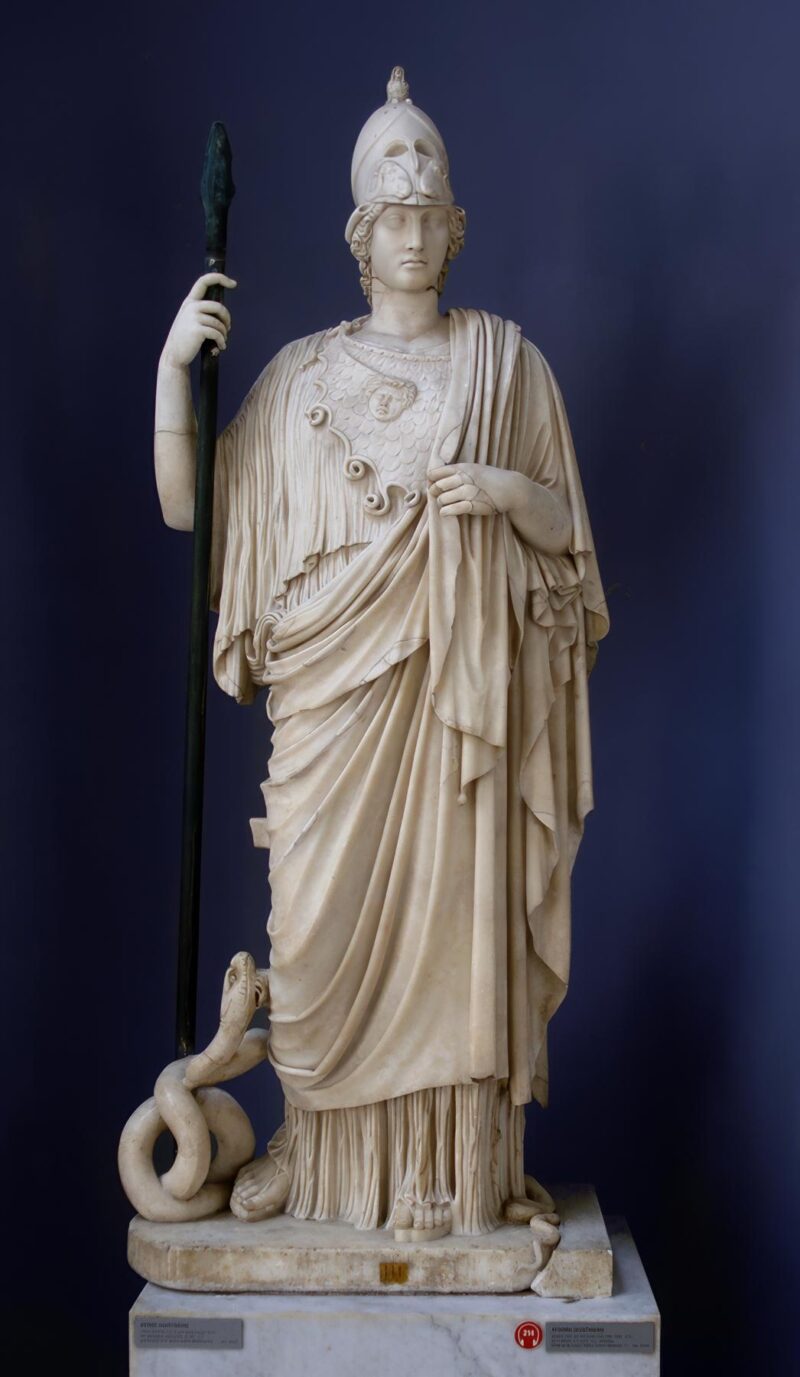
Giustiniani Athena
This image shows the Giustiniani Athena, a famous Roman marble sculpture depicting the Greek goddess, Athena. It is a 2nd-century Roman copy based on a Greek bronze original dating from the late 4th century BC. The statue depicts Athena wearing a helmet, holding a spear, and with a coiled snake at her feet, symbolising her protection of Athens. ©Vatican Museums in Rome.
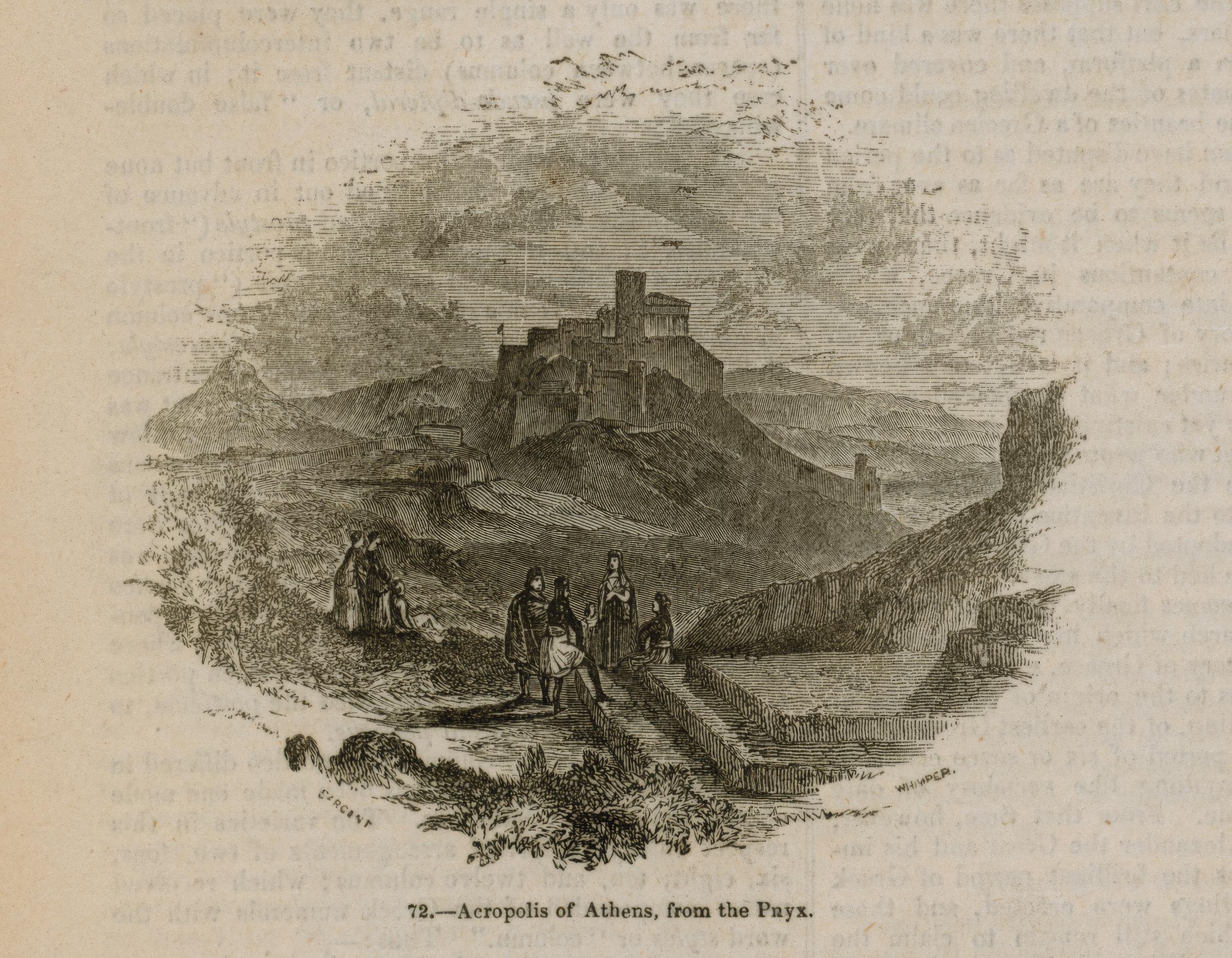
A The Acropolis of Athens as seen from Pnyx Hill
©New York Public Library
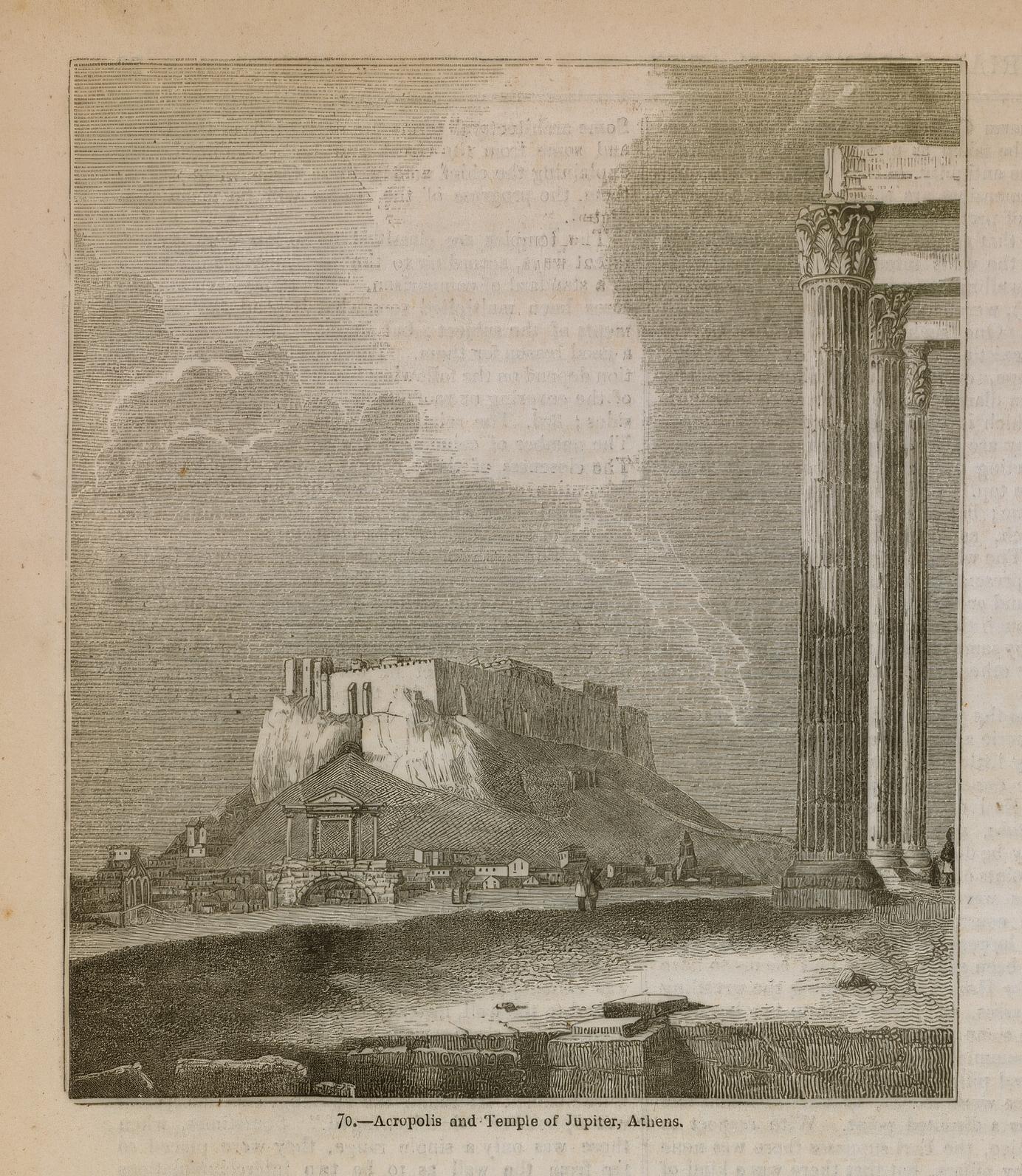
The Acropolis and the Temple of Jupiter in Athens
©New York Public Library
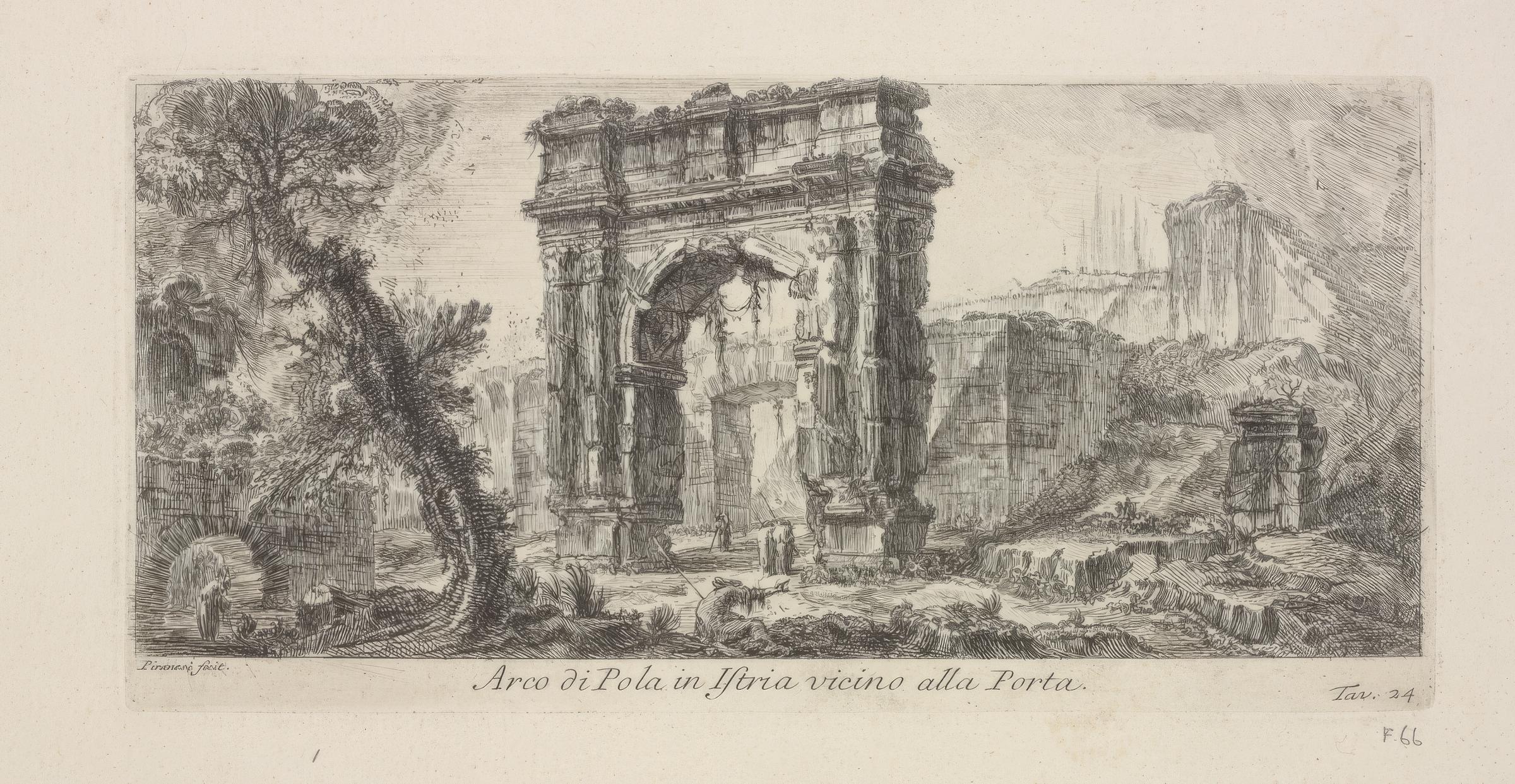
Pola Arch in Iftria
©New York Public Library
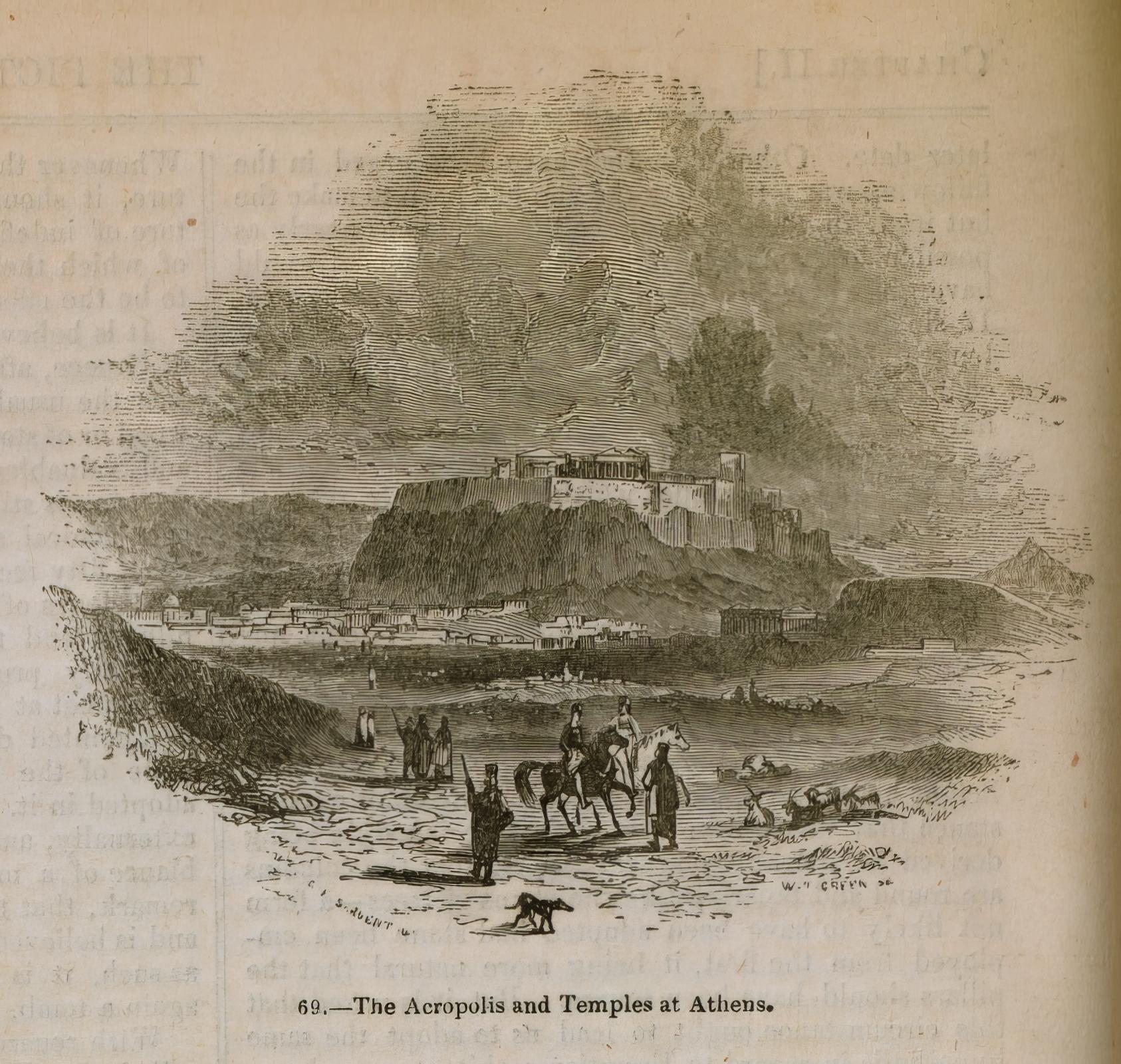
Acropolis and temples of Athens
©New York Public Library.
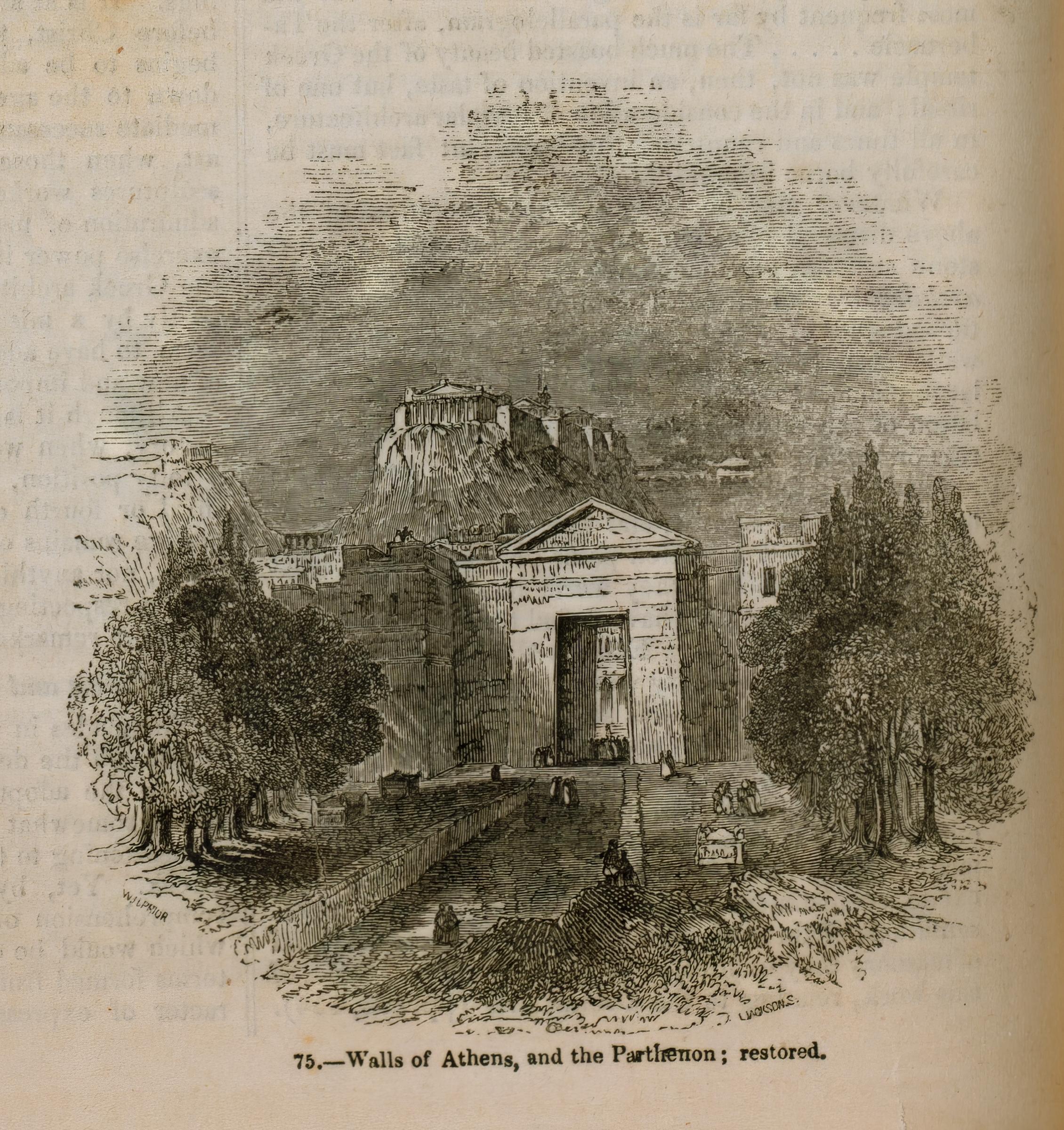
The restored walls of Athens and the Parthenon
©New York Public Library.
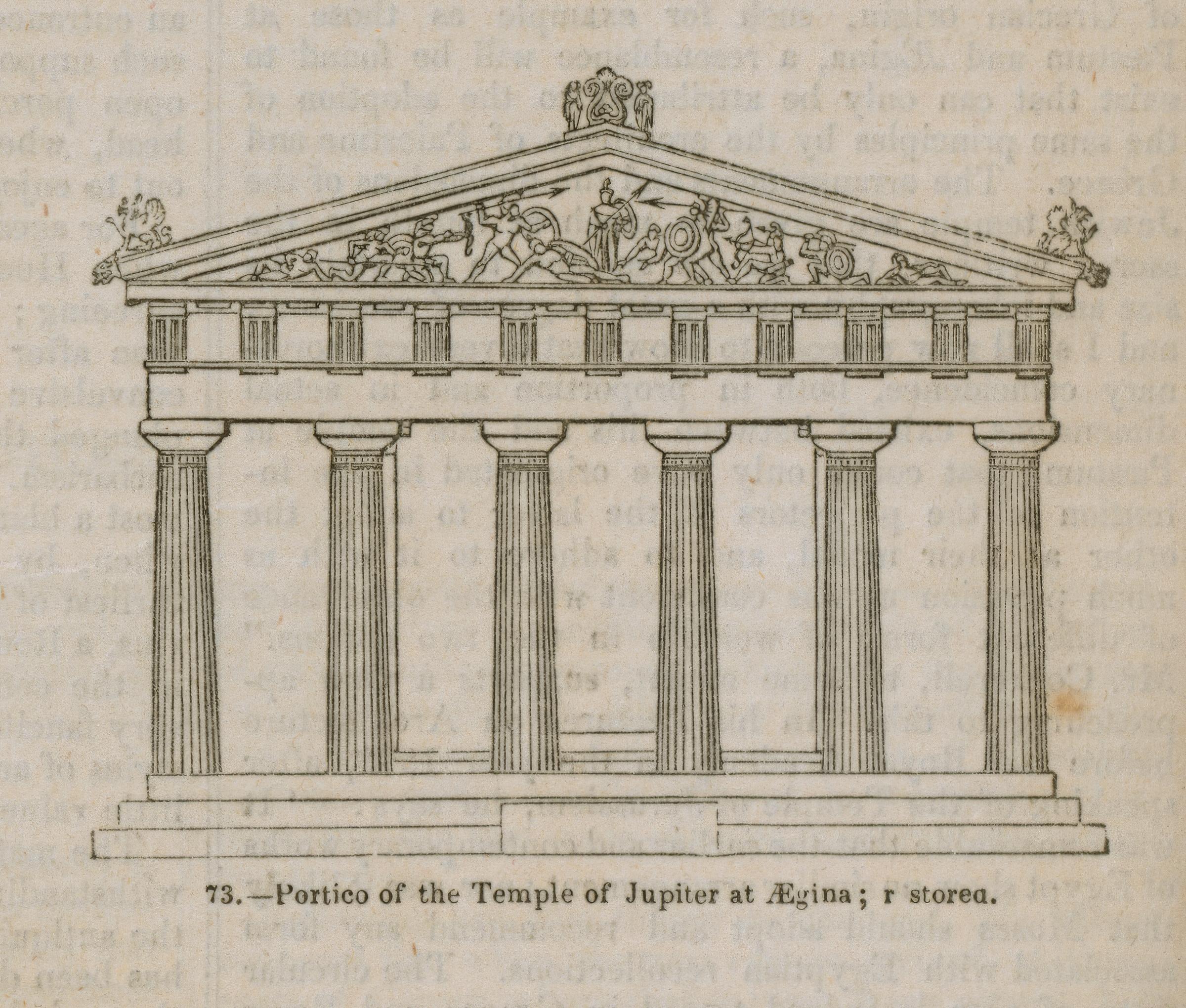
Portico of the Temple of Jupiter on the island of Aegina in Greece.
©New York Public Library.
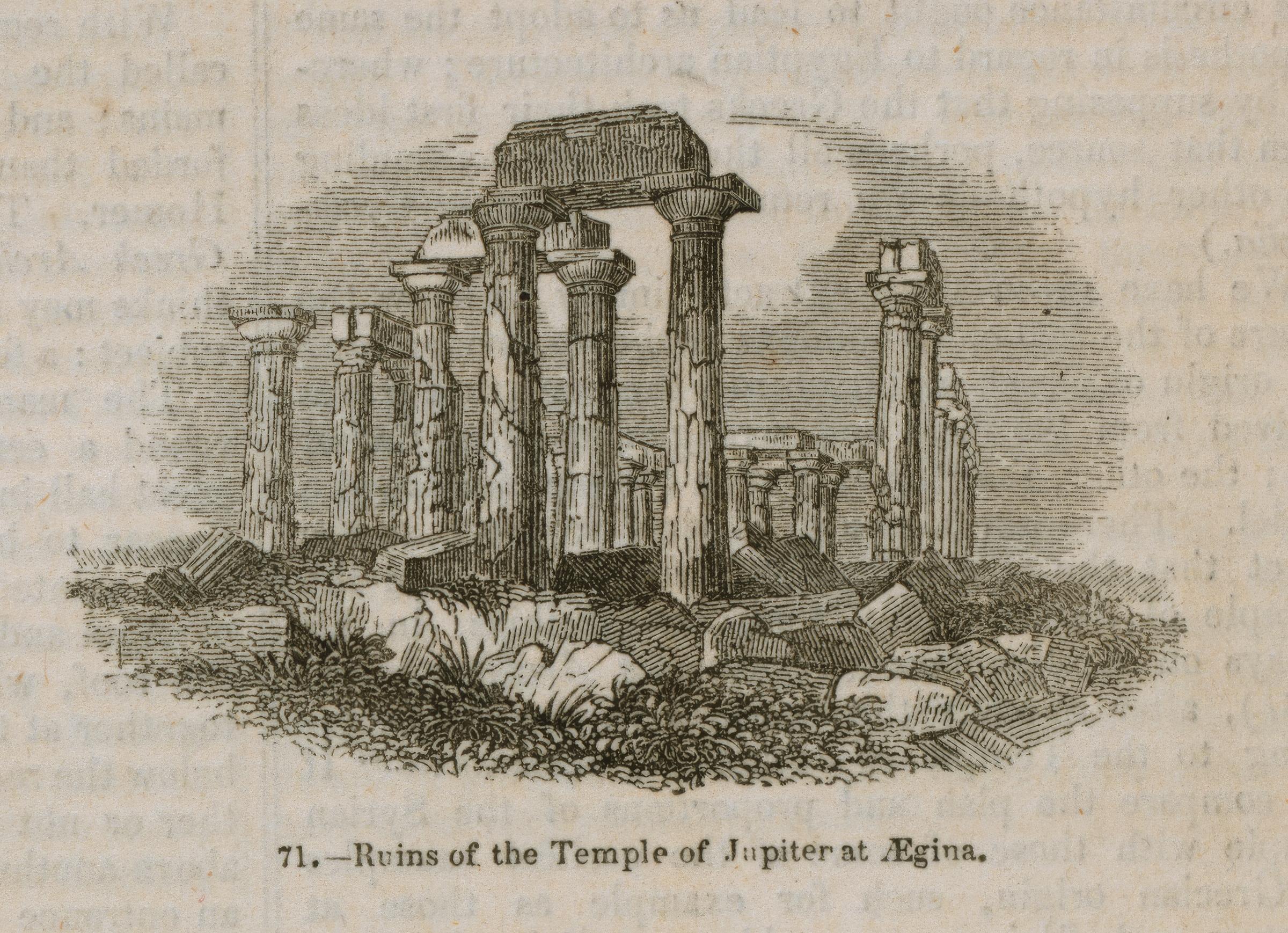
Ruins of the Temple of Jupiter on the island of Aegina in Greece.
©New York Public Library.
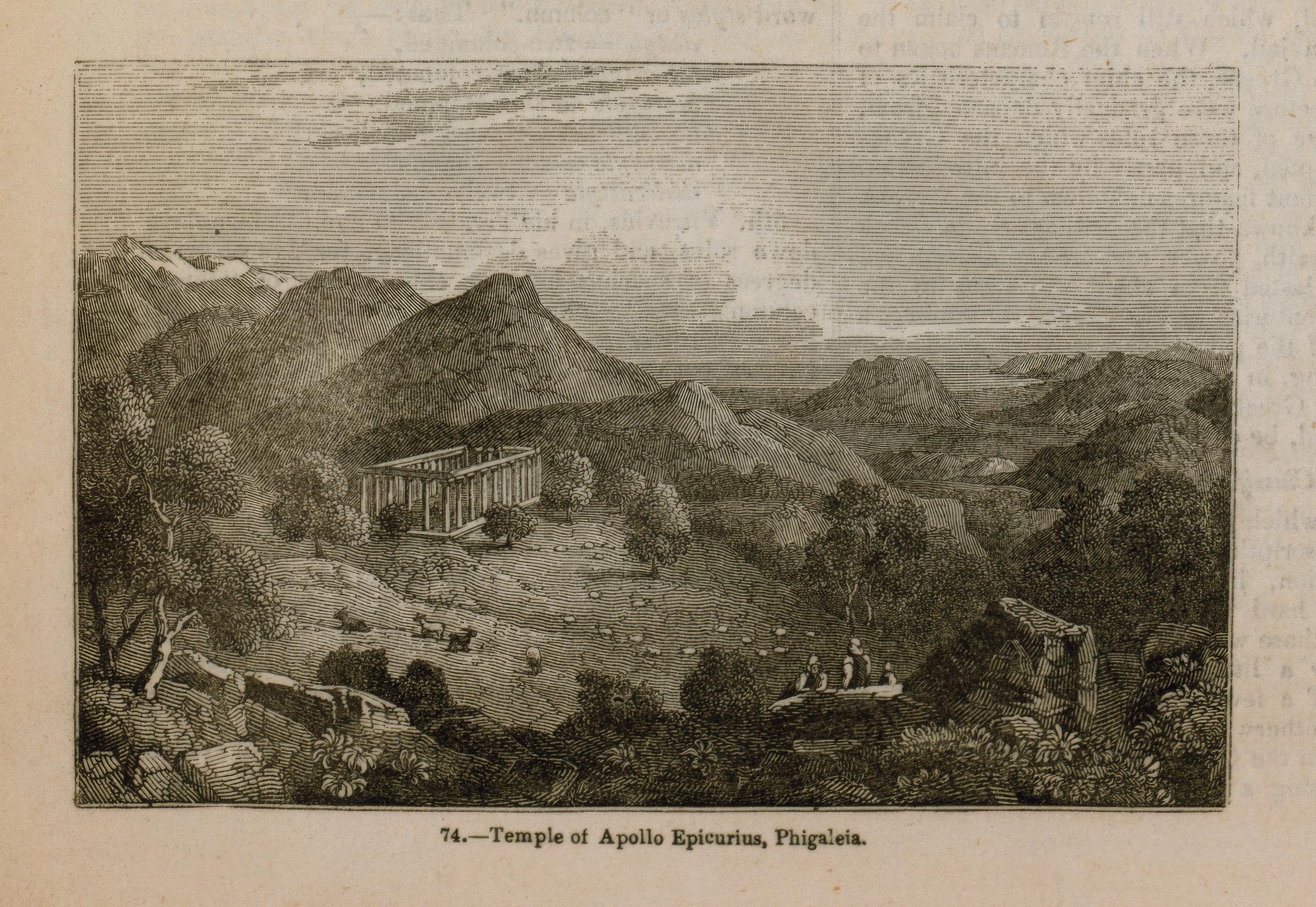
Temple of Apollo Epicurius at Figalia.
©New York Public Library.