The experience of the Swiss explorer, journalist and writer during her journey to colonial Argelia entails one of the most revealing testimonies of her time as a traveller.
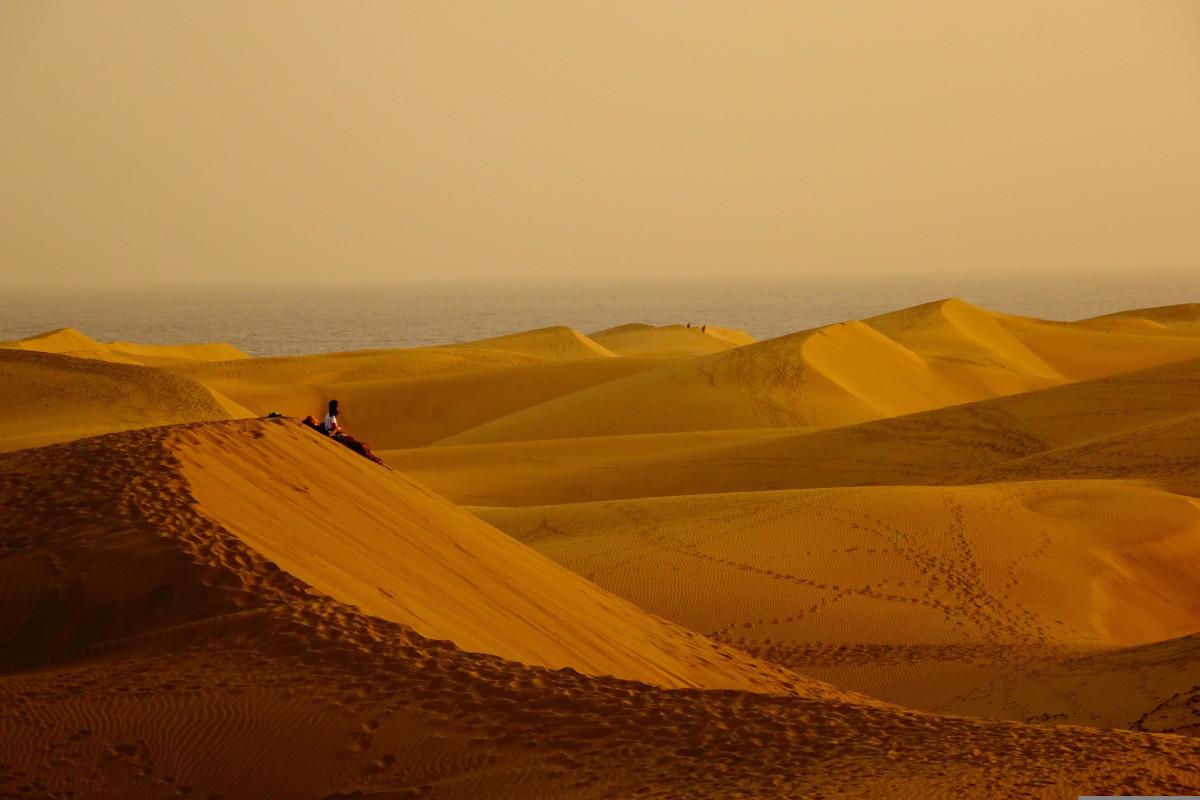
From afar, Ain Sefra, the Gate to the Sahara, seems to have been built in a sea of sand. The city emerges at the end of the Atlas mountains, under the splendid red colour of the dunes I discover, under the western sun of Islam, the Muslim cemetery of Sidi Boudjemmâa: desolate, windswept and littered with dried herbs. A modest tomb, cracked by time recalls in Arabic and French the Swiss writer of Russian origin who found in the Algerian desert her promised land. She died at 27, buried by the flooding of the rivers Sefre and Mulen, during the disaster that took place in the region on 21 October 1904. Scattered in the room on the first floor of her house were also her manuscripts −the testimony of her last seven years in African land−, found with stains from mud, partially destroyed and illegible. Her life had the same brilliance as the waters that dragged her away: the same movements, turmoil, intensity, noise and beauty. The freedom of travel and writing drove her to the shores of the Maghreb, metamorphosing her into an Arab gentleman, becoming also a mystical taleb (apprentice) recognised by the wise men of marabout Islam, and she did it with such violence that she ended swallowed up by the sands. Who would not read her biography as if were the last novel of all her works?
Isabelle Eberhardt, −also Mahmud Saadi, Nadia, Mariam or Nicholas Podolinski, for all those were names that impersonated this woman impassioned by infinite solitude and the infinite mystery of the desert− had been born in a house on the outskirts of Geneva in 1877. She inherited her mother’s birthname, who escaped Russia with the tutor of her children, Alezander Trophimoski, who was an extravagant anarchist nicknamed Vava. From him, Isabelle was to receive an encyclopaedic knowledge: philosophy, literature, geography and medicine, in an atmosphere of rigid moral and intellectual discipline. She translated the Russian poets, learned Arabic and indulged herself in a feverish reading of the Koran. A certain affective disorder, sentimental and aesthetic, suggests the existence of a void at the origin, an emptiness or absence that must be fulfilled. A “natural child”, never will she accept Vava as her father −she confided she was the result of a rape− whilst her biographers envision a more illustrious paternity such as the poet Arthur Rimbaud. Rather than inventing a paternal figure, Isabelle garbed herself in the mask of a masculine persona, as revealed in her intimate writings: “I am alone”. She used such ficticious identities as a way of life and expression, as a disguise which first presented her as a cynic and a libertine, to finally becoming her true personality: that of a nomad.
“A Nomad I was when as a little girl I kept dreaming while gazing upon the road, that white and appealing road that lead straight ahead, under the sun that appeared ever more resplendent, toward the bewitching unknown… Nomad I will be throughout my life, a lover of changing horizons, the remoteness yet unexplored, for every journey, even to the most frequented and well-known regions, is a exploration.”
With her gaze turned towards the East, since adolescence, she deserted at 20 years of age the triumphant West of the Belle Epoque with no intention of coming back. Whereas before leaving Switzerland, Isabelle had joined the Russian nihilists, she will soon abandon the restrictive myths of progress, science or the materialism in which we are still embeddedShe departs to discovery of herself, drifting, not accepting any frontiers, which led her to discover her spiritual dimension −by means of mysticism− to her desire to melt with God.
Awaiting her is a bewitching land, a unique land where silence reigns, where one finds peace through monotonous centuries. A land dreamy of delusion, where the sterile turmoils of Europe do not reach whatsoever.
Her wanderings start in May 1897, when accompanied by her mother, she settled in Bone in northern Algeria. There, a new and dramatic stage of her life begins. This first departure will seal her destiny forever. Nathalie and Isabelle lived in a humble house at the Arab quarter and they converted to Islam. Six months later, her mother died of a heart attack, and right afterwards, her step brother Vladimir took his own life. The past dissolved for Isabelle, who commits her will to her passion for the road.
In El Oued, the oasis-town in the heart of the white dunes, she reaches the ultimate revelation of this harsh and splendid country. In front of the blue horizons of the desert, she will find a space vast enough to enable her to unleash her imagination. The illegitimate daughter, turned intellectual, progresses into her metamorphosis.
Biskra, Touggourt, El Oued: as this voyage southbound develops, Podolinski started to make way for Mahmud Saadi, “that Tunisian who had escaped an Arab school” as if the changing of the name meant the definitive break with her environment and origins. The mask becomes the person in this being who saw in the life of the nomadic tribes and the desert’s changing skies the possibility of return to Primordial Substance. Under men’s clothing and a borrowed personality she will deliver, mounted on her horse Souf, to the seduction of wandering the road and the perfume of the night. She embraced Islam, “the most beautiful religion in the world”.
The most remarkable part of her life took place when she was initiated by an old and powerful Sufi brotherhood, the Qadiriya. The sheikhs of the religious brotherhoods unreservedly welcomed this strange parishioner. Who is it whose being goes beyond the abyss between East and West? A woman? A male, as her name and Arab apparel pretend to make us believe? A being split in pursuit of fullness who had found the best path towards the Other within. During one of her travels, she met who was to be her companion, Slimène, an Arab military official of French nationality who will accept her in the dual role of wife-Isabelle and friend-Mahmoud. In her headlong rush, Isabelle was to definitively place the desert between civilization and her soul.
In Eberhardt arose first the appeal of being mistaken for the other (in her clothing, with differentiated external appeareance) and then later the merging of the two:
“I first started, according to my usual habit, by replacing my stupid European apparel with the Bedouin garb, as comfortable as imposing, which always allows me to avoid the irritating partnership of Arab women, and mixing with men from whom I love their admirable calm and the great Islamic intelligence, moreover.”
La vemos perderse, montando a caballo, en medio de ciento cincuenta o doscientos hombres que celebran la inauguración de una escuela coránica. A su vuelta −relata en su carta del 13 de octubre de 1897−, deja atrás los cantos y bailes de las mujeres y se sienta a comer entre los hombres, en el puesto de honor. Después de su muerte, las mujeres de letras hicieron de ella un paladín del feminismo, una suerte de sufragista reivindicativa que predicaba el evangelio tolstiano a los indígenas. No habían entendido nada.
Eberhardt travelled for her own pleasure, apart from ideologies, ultimately in search of knowledge and spiritual fulfilment. A rebel, far from any prejudice, she deeply disliked European women (“females unfit to be called human beings”). No wonder for someone who had broken the patterns of femininity in her era. Regarding the Arab women, how to yearn for those who addressed such a discriminatory treatment, living in an inner, closed world, when all she delighted was the embracing of space without limits? In her writings, she exposed the order of things that relegates Arab women into the shadows: their abusive confinement, the infantilization imposed on them by men and their dependence. And prostitution, the other face of bourgeous marriage holds a special place in her accounts. Unrestrained, her sensibility became polarized between the extremes of mysticism and sensuality. She reads the Koran, meditates, prays. She frequents brothels and was initiated into the mysteries of the voluptuous and criminal part of Algiers. She leads an almost ascetic life, but she enjoys intoxicating herself between the vapours of alcohol and kif. Between what is too earthly and the unattainable scent of the absolute, Eberhardt becames either hetaera[1] or wise: taleb.
Criticism and slander were going to appear around her soon. It is easy to imagine the rejection by a prudish and hypocritical colonial society towards somebody garbed like an Arab man −gripped by the “wandering madness”−as she wrote for a newspaper that was a defender of indigenous rights, where she denounced the abuse of colonial power. Isabelle protested in vain against the accusations that she was a traitor to the European cause. The dark attack she suffered in 1901 by a marabout[2]inspired by God− apparently due to the rivalry between two brotherhoods−, would serve as the excuse for the authorities to oust her from the country. Foreseeing her departure into exile, Eberhardt evokes the Sahara, “her dark, deep, mysterious yet very real and indestructuible love.”
““Sad lakes without fishes, no birds nor boats, sad islands with no greenery, absolute desert, drearier than the driest dunes. And nevertheless they have their splendour and magic, the little gullies of salt crystals, the transparent lakes that produce mirages, reflecting surreal cities, the palm groves and the dreaming mosques, and the springs where flocks may drink from, which are none but white vapours overheated by sun, drink. Country of illusions, reflections, visions and ghosts, country of unreality and mystery (…).”
In Marseille she felt full of melancholy; she only thought of meeting her beloved Slimène, with whom she was to get married in a Muslim ceremony. As she became a French subject, she was able to return from her exile, to set up in Algiers and continue the writing of her tales, articles and her most intimate accounts. From her adolescence, she found relief and refuge in literature. A nomadic writer, Isabelle Eberhardt describes from the inside the Bedouine and Muslim life where she had managed to integrate. She had departed to discover the Sahara armoured with the melodramatic formulation set by colonialism and the Orientalism of her time. Yet she would not write about Algeria: she would live it from within, as something beautiful and painful. Through Mahamud, she succeeded in integrating herself into the core of the scene that she depicts. She will tell from the interior, as she chose to live among those whom colonialism wanted to deny, while she names them with a term that would become derogatory: “indigenous”.
In early 1904, she joined the reformist French general Lyautey in the “peaceful colonization of southern Oran. She was getting deeper and deeper into the hostile and mysterious south, into territories of uncertain borders, where insubordination and war were chronic. There are some who have interpretated this collaboration as a sign of her ambiguity as a woman defending the Arabic genius and an employee of the Empire. From those months spent in Kendasa −a religious spot, almost a theocratic state− she was to obtain her most beautiful impression of travel. Impressions: just the right word to refer to the brush-strokes that Eberhardt used to compose her depiction, so reminiscent of the palette used by her admired Pierre Loti, that French writer seduced by the Orient. Many other Europeans had already been dazzled by the blinding light of the deserts, the intense colours and strong smells of the Maghreb. Her pages are filled with the changing beauty of the African lands, with the play of light over the monotony of the landscapes and its horizons of blue or pale gold.
The whole seduction of Romanticism is here, −but maybe with a lower dose of banality. Her vision is determined by Romantic exoticism, as she perceived her taste towards the wonderful and mysterious that, for her, embodies the true Arab soul. However, for Isabelle the Orient was not imaginary; hers was a one-way journey, she was one of those true wanderers for whom “il ne s’agit pas de vivre, mais de partir” (“it is not about living, but leaving”), somebody whom maktoub −fate−, lay under the warm shade of Islam.
“Orientalist” ideology maybe remains too close to the justification for 20th-century Imperialism: preserve poverty in order to keep the charm (mystery, that so romantic word), to strive to conserve the archaisms, to announce modernity as illegitimate and alien to the Muslim “soul”. Isabelle Eberhardt searched for communion, not conquest. A mixed picture, contradictions: her involvement as journalist in the Akhbar, the representative newspaper of anti-colonial criticism, led her to become the first female war correspondant in history, reporting the war’s victories along he Moroccan border against Algeria or her collaboration with general Lyautey.
Her diaries, replete with confidencialities and fits of despair and enthusiasm, are an invitation to the journey inside that nature so eager for the absolute, a seeker of reasons to go even farther. Leaving, escaping, going beyond the horizon was always her greatest wish. No doubt she belonged to the universe of those men who were able to live only in the open, to the one of those migratory birds crossing the crystal-clear air. Beings that have turned their back on all civilization, atopic beings. Hers was a geographic adventure and, inseparably, an exploration of being. Travelling and writing (for writing is, always, a leaving) were the faces of a same passion of this woman who loved the melancholy of sunsets, the loneliness of sand and empty horizons that invited her to get lost in the relentless river of time.
By Maria Teresa Pérez
Writer. PhD in Ibero-American Literature
[1] In ancient Greece, a hetaira was a courtesan who enjoyed am outstanding social position, and among men in general as a high-class prostitute.
[2] The Marabut is sort of consultant and wise man in the African tribal societies, who hold a great moral power.

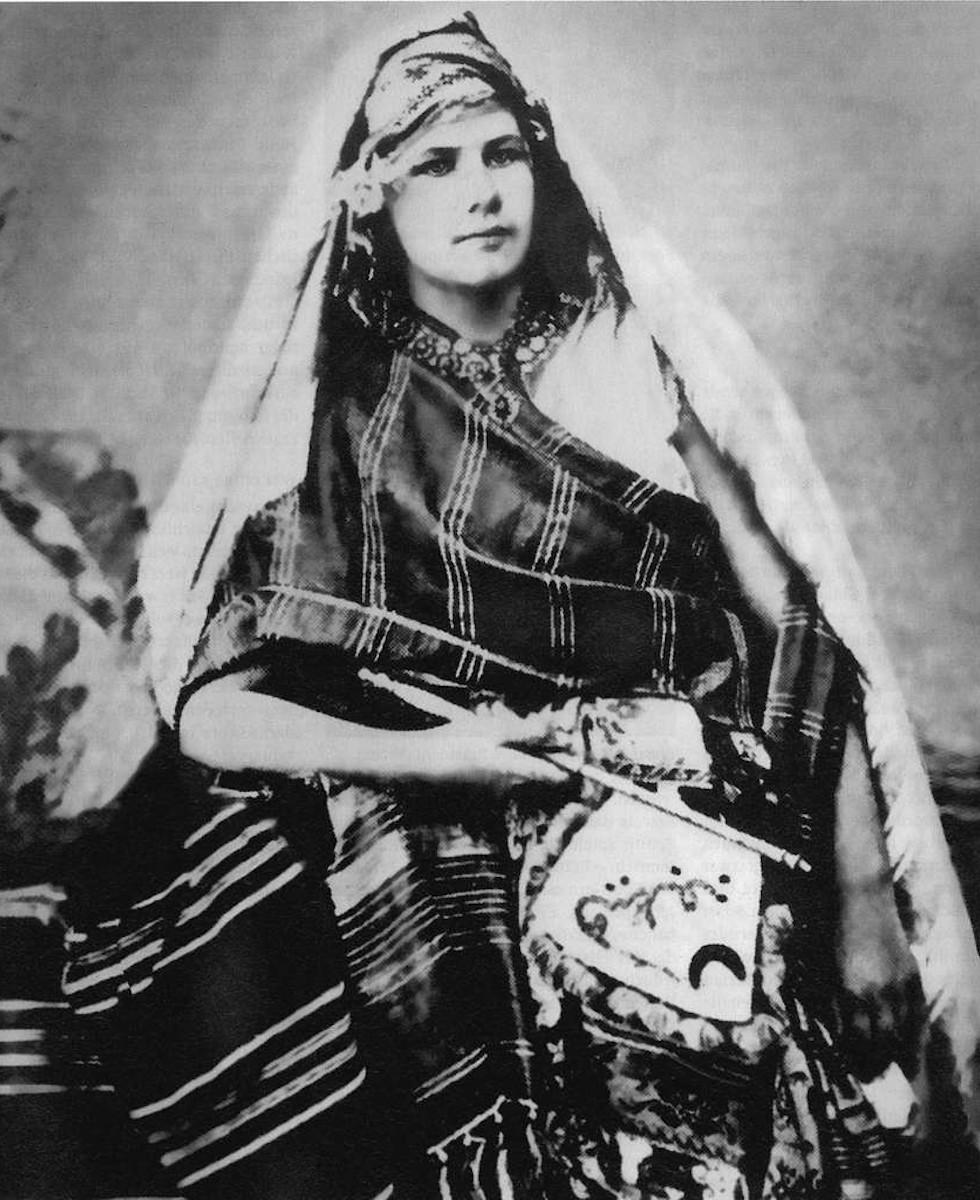
Isabelle Eberhardt dressed in Arabic style.
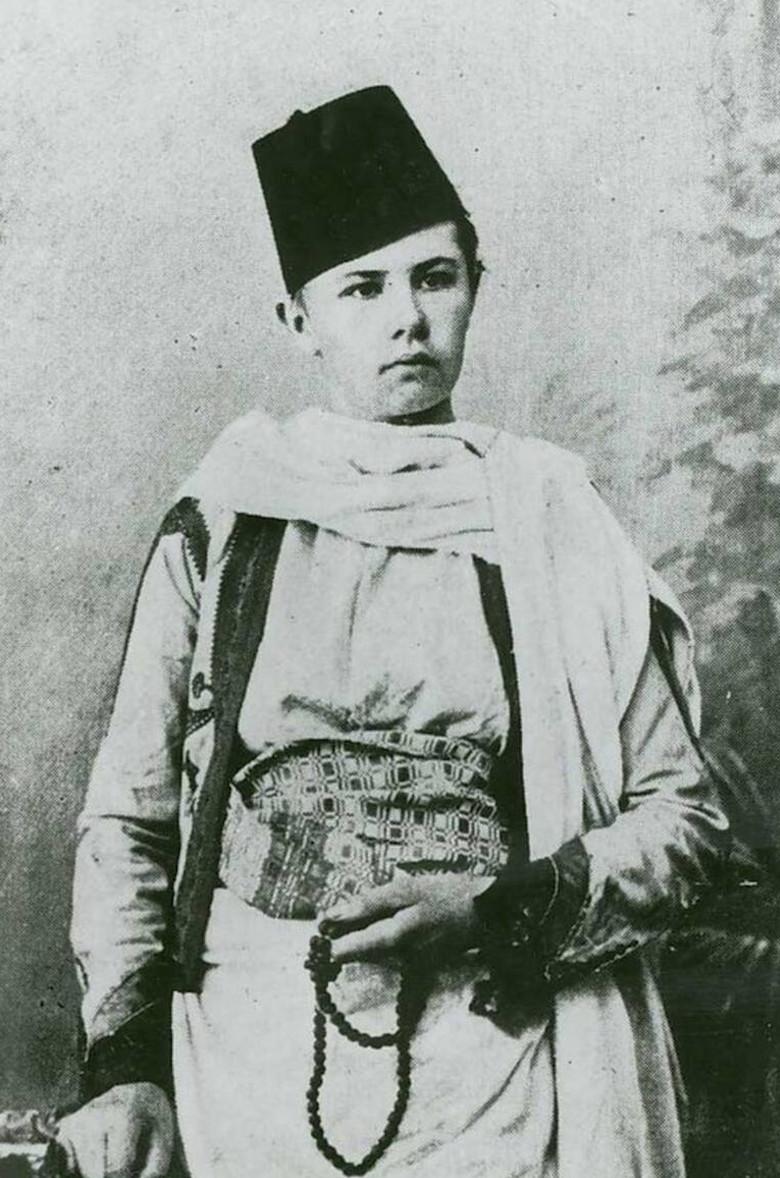
Isabelle Eberhardt dressed as a man in Arabic style.
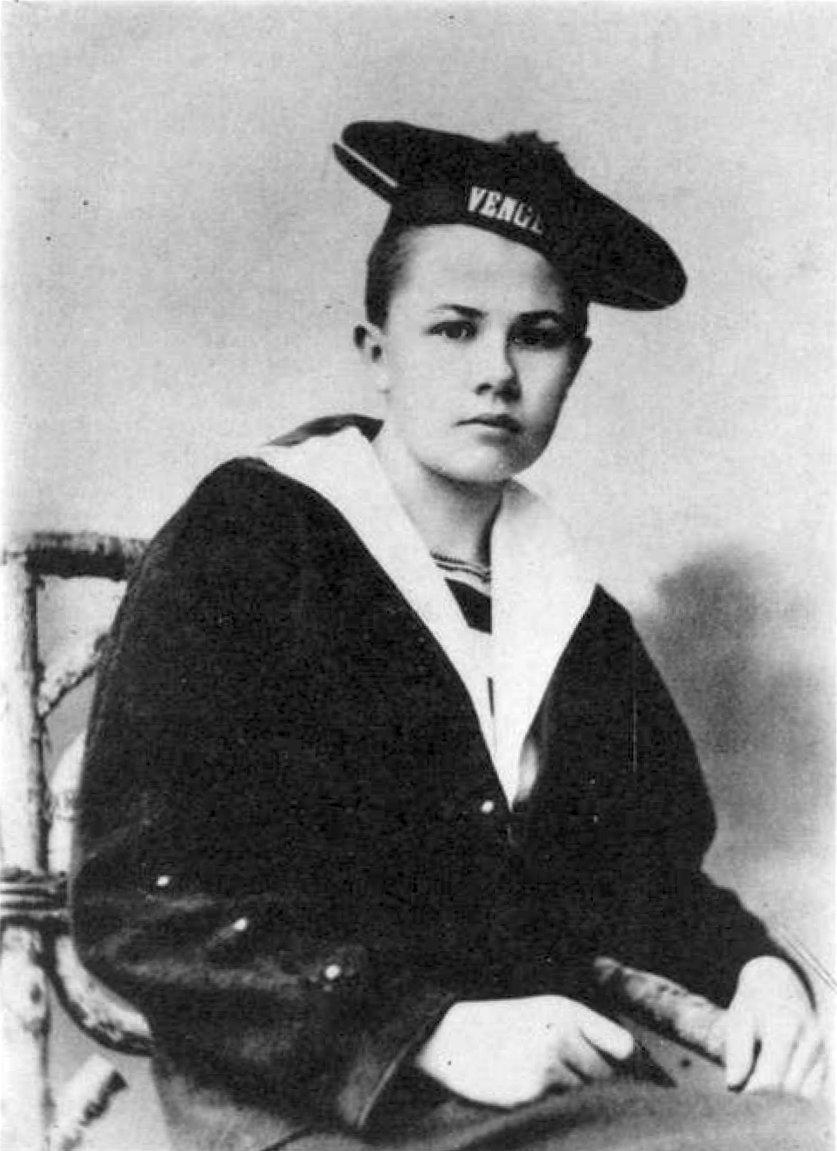
Isabelle Eberhardt in her teens.