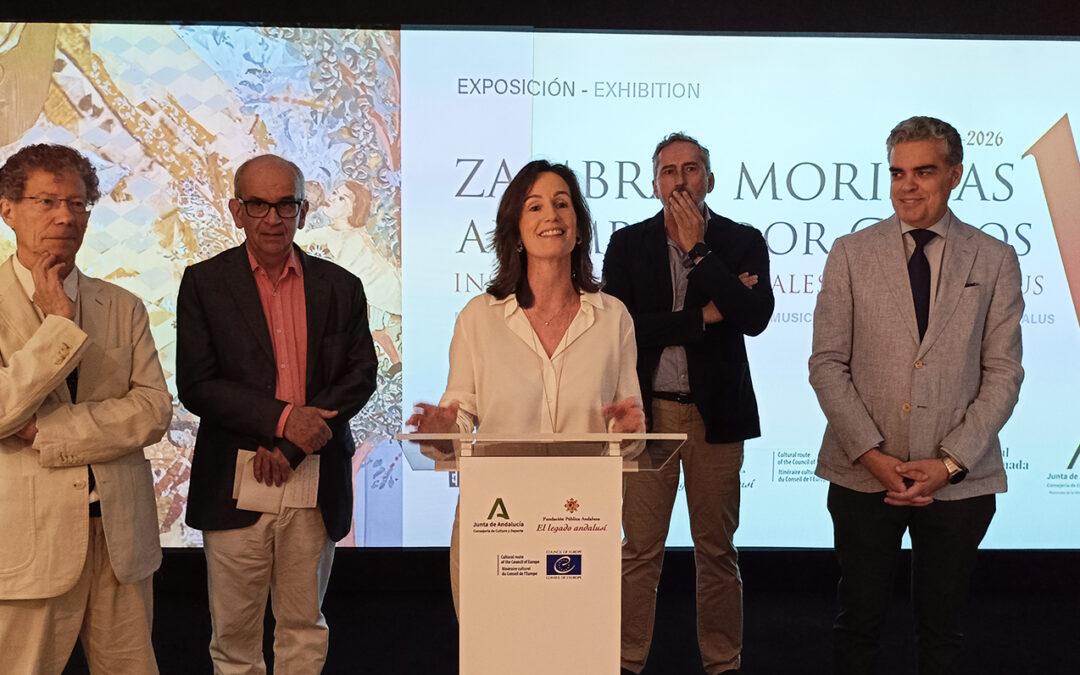
La muestra conmemora el V Centenario de la estancia de Carlos V e Isabel de Portugal en Granada y pone en valor el legado musical andalusí y morisco
El Festival Internacional de Música y Danza de Granada, la Biblioteca de Andalucía–Centro de Documentación Musical de Andalucía y la Fundación Pública Andaluza El legado andalusí presentan la exposición “Zambras moriscas al emperador Carlos V. Instrumentos musicales de al-Andalus”, que podrá visitarse en el Corral del Carbón a partir del 25 de junio de 2026.
La muestra se enmarca en la conmemoración del V Centenario de la estancia en Granada del emperador Carlos V y de la emperatriz Isabel de Portugal, quienes llegaron a la ciudad en junio de 1526. Con esta iniciativa, las instituciones organizadoras rinden homenaje a las zambras moriscas que fueron ofrecidas a la corte imperial durante su estancia en Granada, así como a los instrumentos musicales que las acompañaban, herederos directos de la tradición musical de al-Andalus.
Coordinada por la Fundación El legado andalusí y comisariada por el musicólogo y especialista en música medieval Reynaldo Fernández Manzano, la exposición propone un recorrido visual y contemporáneo por el universo sonoro andalusí y sus pervivencias a lo largo de los siglos.
El término “zambra”, asociado a la música desarrollada en el reino nazarí de Granada, aparece documentado ya desde el siglo XIII. Estas manifestaciones musicales gozaron de una notable presencia social y cultural, hasta el punto de que fray Hernando de Talavera, primer arzobispo del Reino de Granada, permitió la participación de grupos de zambreros en celebraciones tan significativas como la procesión del Corpus Christi.
Uno de los principales atractivos de la exposición es la destacada colección de instrumentos musicales de al-Andalus procedentes del Centro de Documentación Musical de Andalucía, de los fondos de la Fundación El legado andalusí y de la colección particular del comisario. Entre ellos se exhiben piezas únicas reconstruidas a partir de representaciones iconográficas de los siglos X al XIII, realizadas por prestigiosos maestros luthiers especializados en música medieval, como Carlos Paniagua.
Asimismo, la muestra reúne documentos de gran valor histórico, entre los que destacan la Real Cédula de Isabel de Portugal, fechada en 1530 y dirigida al arzobispo de Granada en defensa de las zambras moriscas, cedida excepcionalmente por la Catedral de Granada, y el Cancionero de al-Haik, compilado en el siglo XVIII y considerado una de las fuentes fundamentales para el estudio de las nubas andalusíes, la forma musical más refinada y representativa de esta tradición.
La exposición cuenta además con la participación del proyecto de investigación Artografía, impulsado por el Ministerio de Ciencia, Innovación y Universidades, mediante ilustraciones realizadas por Asunción Jódar, Ricardo Marín y Silvia Segarra. También ha colaborado el maestro artesano granadino Jiménez Mariscal, responsable de la recreación tipológica de diversos silbatos de tradición andalusí conservados en museos andaluces.
Con esta propuesta, las instituciones organizadoras invitan al público a descubrir un patrimonio musical de extraordinaria riqueza que forma parte de nuestra memoria cultural y que sigue proyectando su influencia hasta nuestros días.
Exposición: Zambras moriscas al emperador Carlos V. Instrumentos musicales de al-Andalus
Lugar: Corral del Carbón, Granada
Fecha: Desde el 25 de junio a octubre de 2026